
Does Advertising Ruin Everything New And Great?
Celebrating The "Sweet Spot" Before Ads Swoop In
Posted by Charlie Recksieck
on 2024-09-05
Yet in the digital age, many people do expect content to be free. Music and video is easily consumed on free ad-supported platforms like YouTube and Spotify. There's a deep cultural expectation that information should be open and costless, even though it's funded by ads, data collection, or donations.
Full disclosure: my dad was a lifetime "ad man" and I’m equal parts fascinated by, nostalgic for, and repelled by lots of advertising
The Internet's Free Culture Legacy
From the early web onward, most online experiences-news, videos, social media, open-source tools-were free at the point of access.
This establishes a "sweet spot" where things could be free AND free of ads. Think about podcasts circa 2010 if you listened then. I did ... a lot. Other than an occasional cheap ad read by the host for "Me Undies" or "Man Grate", I wasn't paying for podcast content and I wasn't being bombarded with ads.
The Sweet Spot
It seems like there are always loopholes in early stages of new media and methods.
The "sweet spot" of new technologies refers to the phase when innovations are fresh, exciting, and relatively uncommercialized-before widespread monetization, heavy advertising, or corporate control changes how people interact with them. Some could say this is often when the tech is most innovative, experimental, and user-driven.
Characteristics of the Sweet Spot
Early Adoption by Enthusiasts: Tech is mostly explored by hobbyists, early adopters, and niche communities.
Minimal Advertising Influence: Users engage for curiosity or problem-solving rather than brand-driven messaging.
Creative Experimentation: Low corporate oversight allows unconventional uses, hacks, and creative applications.
Open Standards & Sharing: Often accompanied by open-source projects, forums, and grassroots collaboration.
Sometimes the consumer "cost" of advertising evolves over time. People used to watch free tv by putting up with ads. To get fewer ads or more content, consumers in the 1970s and 1980s started paying for cable bundles, followed by premium cable for a dedicated price = no ads whatsoever. Right now, we've entered a hybrid streaming model where we pay Hulu and Amazon but also often on plans that still have ads. Who knows where we'll all be in 10 years.
More Examples of The Sweet Spot
Early Web (1990s): Communities like Geocities and personal blogs shaped web culture before banner ads dominated.
Social Media Startups: Platforms like Instagram or TikTok were user-experience-focused before aggressive ad monetization. Basically, every successful social media app has its early cool era, then core users get turned off when the general public hops on.
Usually this is younger users complaining about older users.
Cryptocurrency & Blockchain: Early adopters experimented with decentralized applications before mainstream financial products entered.
Who swoops in to "ruin" most things? Advertisers.
Does Advertising Ruin Everything?
Advertising doesn't literally destroy everything-but it can distort or dilute nearly everything it touches. When creativity, culture, or communication become vehicles for selling, their original purpose often shifts from expression to persuasion.
The constant demand for engagement drives sensationalism and distraction rather than understanding. Or to put it another way, it makes most things worse.
Did Madison Avenue Advertising Kill The 1960s?
The idea that advertising "destroyed" the hippie movement has some historical basis when you look at how advertising and consumer culture interacted with counterculture.
The 1960s hippie movement promoted anti-materialism, peace, free love, and communal living. It rejected mainstream consumer culture and traditional authority, embracing DIY ethics and cultural experimentation.
By the late 1960s, advertisers noticed the influence of youth culture on trends, music, fashion, and spending. They realized that the very rebellion of hippies could be repurposed to sell products:
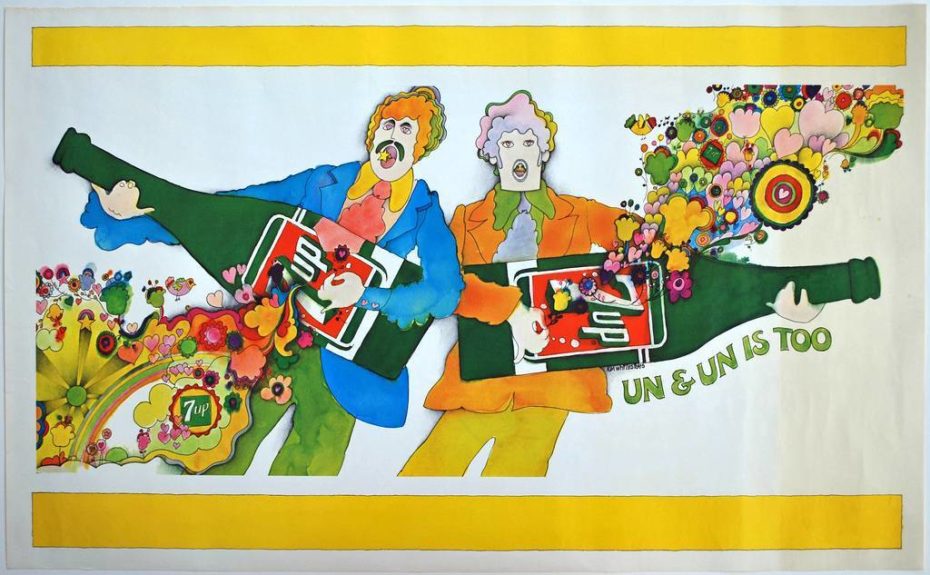
Psychedelic imagery appeared in ads for soft drinks, clothing, and music
"Flower power" and countercultural aesthetics were used in campaigns
The anti-establishment tone was commodified to make rebellion marketable
Gross. The term was that ads and money "co-opted" the movement. What began as anti-materialist ideas were turned into profitable products. Tie-dye shirts, "hippie" music albums, and festival paraphernalia were sold widely.
As countercultural symbols became mainstream, their political and philosophical edge was softened. Anti-war and anti-consumerist messages were overshadowed by fashion and lifestyle marketing.
Look at this ad at the top of this post with the 1960's iconography selling 7-Up. Or think about Don Draper in the last episode of Mad Men coopting a peace and love retreat. Or what it must have felt like to watch Darrin Stevens wearing love beads on an episode of Bewitched.
The gross fizzling of the hippie movement is an extreme example, but it shows what happens when advertising gets its mitts on genuine trends and creativity.
The Takeaway
From a content provider perspective, of course the ads are absolutely necessary to have the time and security to produce useful content. Despite its negatives, advertising funds free media, supports creators, and connects products to audiences.
But the real danger isn't advertising itself-it's when commercial incentives replace all other values for creators. When they think of themselves as brands and can't offend the advertisers, then they're just marketing tools.
To quote Danny Devito's character in the movie The Big Kahuna, "That means that you preaching Jesus is no different than Larry or anybody else preaching lubricants. It doesn’t matter whether you’re selling Jesus or Buddha or civil rights or how to make money in real estate with no money down. That doesn’t make you a human being. It makes you a marketing rep. If you wanna talk to somebody honestly, as a human being, ask him about his kids. Find out what his dreams are, just to find out, for no other reason. Because as soon as you lay your hands on a conversation, to steer it, it’s not a conversation anymore. It’s a pitch, and you’re not a human being. You’re a marketing rep."
I guess what I mean to write is that I miss the sweet spot in early internet and podcasts. Cherish those eras when they happen.
